Welcome to our website.
Insulation brings year round comfort and savings, and we do the work properly and affordably. We also insulate new residential construction, additions and remodels, and existing commercial buildings.
Many older homes have little or no insulation, and until brought up to today’s codes, are too cold in the winter and hot in the summer. Once a home is insulated, the difference is very pleasant and surprising. The house is more comfortable and the power bills lower. The cost to insulate is less than you’d probably expect, and a Federal tax credit is available for an additional 30% of the materials cost (IRS form 5695).
Many homes are also somewhat drafty, and can be air-sealed better, and we also offer air sealing service. We also install roof and foundation venting.
Call us for a free estimate. 1-800-281-1898
———————————————————————
The additional words below are primarily meant to impart that the material for attic insulation should always be cellulose, but also address many other questions asked by our past customers over time.
————————————————————————–
The yardstick of all insulating materials is the R-value, or insulation value, which allows us to say simply that R-13 has an insulating value of 13″ of solid wood, an R-30 has an insulating value of 30″ of solid wood, and so on. The wood used for this standard is Douglas fir, which is a fairly good insulation material in it’s own right, but the insulation value of 13″ of Douglas fir wood compared to R-13 fiberglass (made from glass) or cellulose (made from recycled paper), both only 3.5″ thick, means fiberglass and cellulose are far more efficient insulation materials than even the Douglas fir, by a factor of 3.7 times. This is why cellulose and fiberglass are the insulating materials most practical and affordable compared to other insulating materials, are most often used to insulate homes and other buildings.
Insulation codes in this part of the US were virtually non-existent before 1976, other than some areas requiring a thin layer of attic insulation 3″ to 3.5″ thick be installed. In 1976 the code universally required R-19 for ceilings and R-11 for exterior walls. The codes increased after 1980 to what they are today, with slight increases in wall and ceiling insulation. Walls were R-11 since 1976, but slightly increased to R-13 around 1993, and R-30 has been required in attics since 1980-81, but was raised to R-38 in the Tri-Valley area in the early 2000’s, but remain R-30 elsewhere. If you participate in utility or state subsidized insulation programs, nowadays they will usually require attics be brought up the R-44 or even R-49, and include attic air sealing. Floor insulation remained at R-19 since 1981, when floor insulation was first required. So if your home was built before 1981, and has not been insulated since it was built, it needs insulating, and if built before 1976, and has not been insulated since it was built it probably needs insulation everywhere, attic, walls, and floors.
The savings for a typical attic and wall insulation job will be, on average, 20-40% of the gas bill, plus the air sealing, but since there are tiers on the utility bill, and the rates are higher when your use is higher, the actual savings will often be higher, 20% – 50%. Exact savings vary, depending on what your energy usage is and how well insulated your home is now versus after we insulate.
In terms of relative energy savings, the attic accounts for 10% to 30% (in hot and cold weather), the walls 10-20% (in hot and cold weather) and the floor 10% to 20% (floors save energy only during the cold weather). Attics are usually partially insulated already, so if you are having your attic insulation upgraded, the difference will be less, but, in most cases, are still the most cost-effective measure (ie item) to make a home more energy efficient. If you are doing the attic and the walls, the two will be close to each other in cost, but, on rough average, of that difference in savings, 60% of the difference will come from the attic insulation, and 40% will be from the walls.
The most important places to insulate are, generally, in this order,
1) The Attic
2) The Walls
3) The Floor
Cellulose and fiberglass are the main types of insulating material used in residential construction, and each can be used as a substitute for the other, as they perform similarly. However, each has qualities that make it the best material for different parts of a home. Cellulose insulation offers better sound deadening, pest repelling, and closed cell benefits that are not offered by fiberglass, and provides a better, less expensive application in most attics, existing walls, and existing garage ceilings and overhangs. Fiberglass blankets provide better and less expensive applications in subfloors, both new construction and retrofit, and walls, vaulted ceilings, garage ceilings and overhangs (soffits) of new construction.
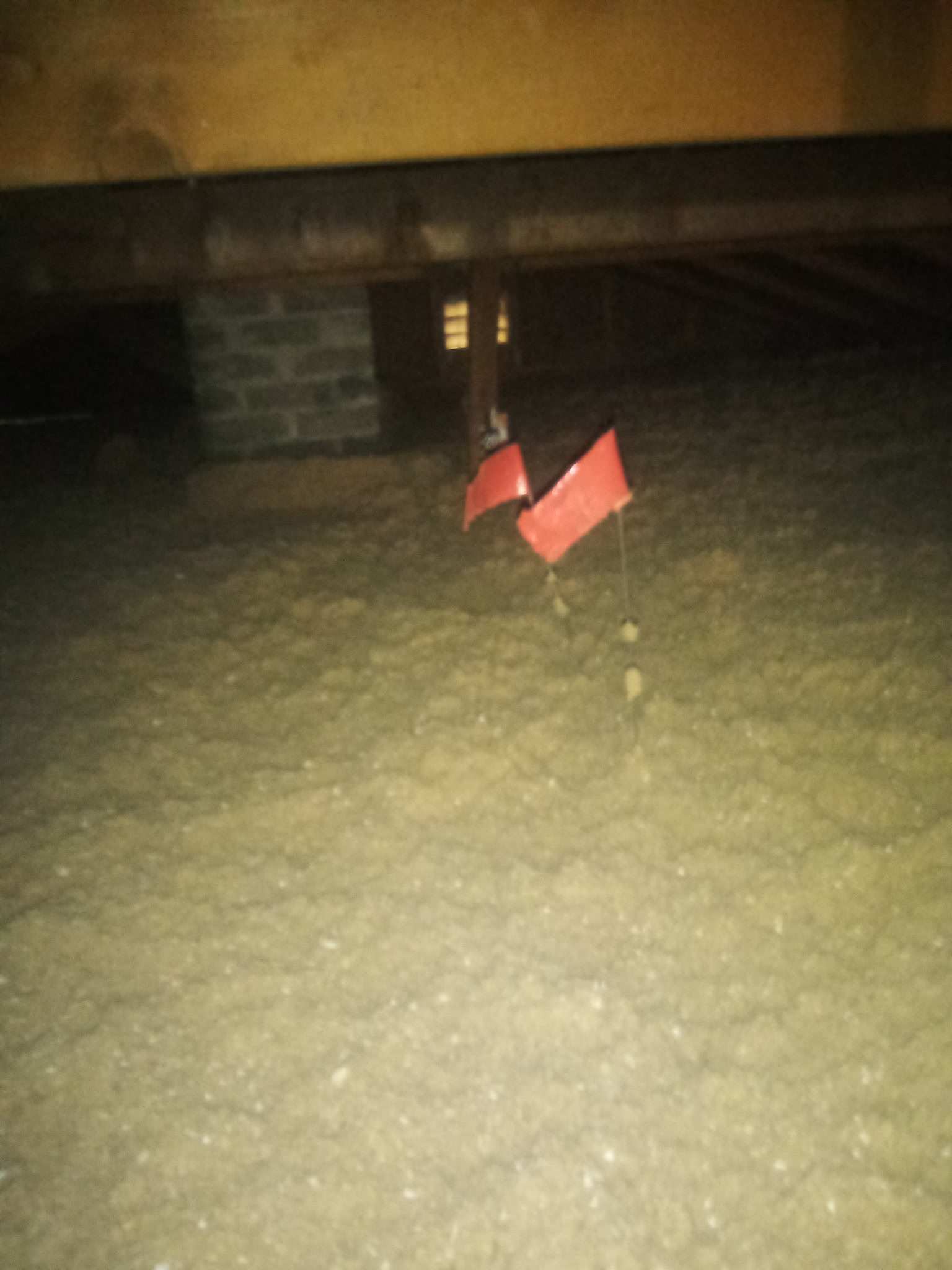
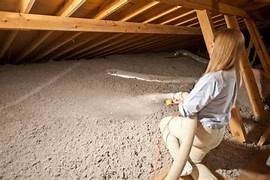
Cellulose is a blown-in insulation, meaning that unlike it’s competitors, fiberglass batts or blankets, it covers the attic floor completely, while the fiberglass batts are made to be installed between the floor joists of the attic, still leaving the tops of the joists uninsulated, and also, do not have perfect contact with any existing insulation that might be there right now, while the cellulose has perfect contact. (Fiberglass manufacturers do not warranty their products when another type, say, cellulose or rockwool is existing underneath it, but cellulose manufacturers do). The cellulose material does not need to be blown in as deeply to achieve the same R-value as blown-in or blanket fiberglass insulation, which often is an important factor. Fiberglass may appear to be less dusty that cellulose, but it is a more irritating dust, both when breathing in the dust and when in contact with the skin, than cellulose, though less visibly so, but to people in the house below neither is an issue. (With either product an installer should always wear a dust mask while installing it). The labor cost of cellulose is less, since each piece of blanket insulation has to be installed by hand, while the blown in cellulose is installed using a hose to blow it in, which requires roughly half the time as the fiberglass. The cellulose contains boric acid as a fire retardant, and this same chemical also keeps bugs and rodents away. And, finally, the cellulose is advertised by the manufacturer as an excellent sound deadening material.
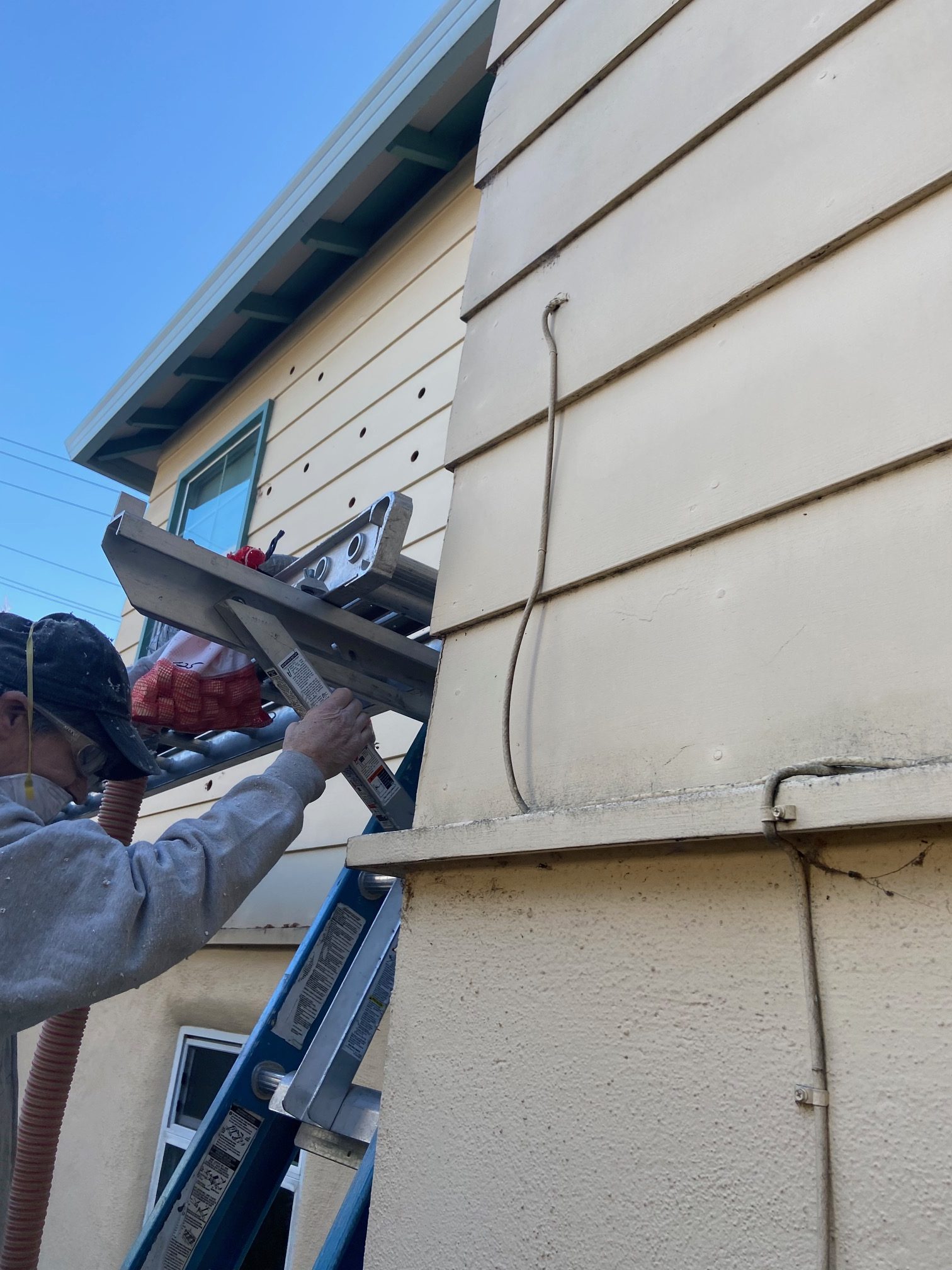
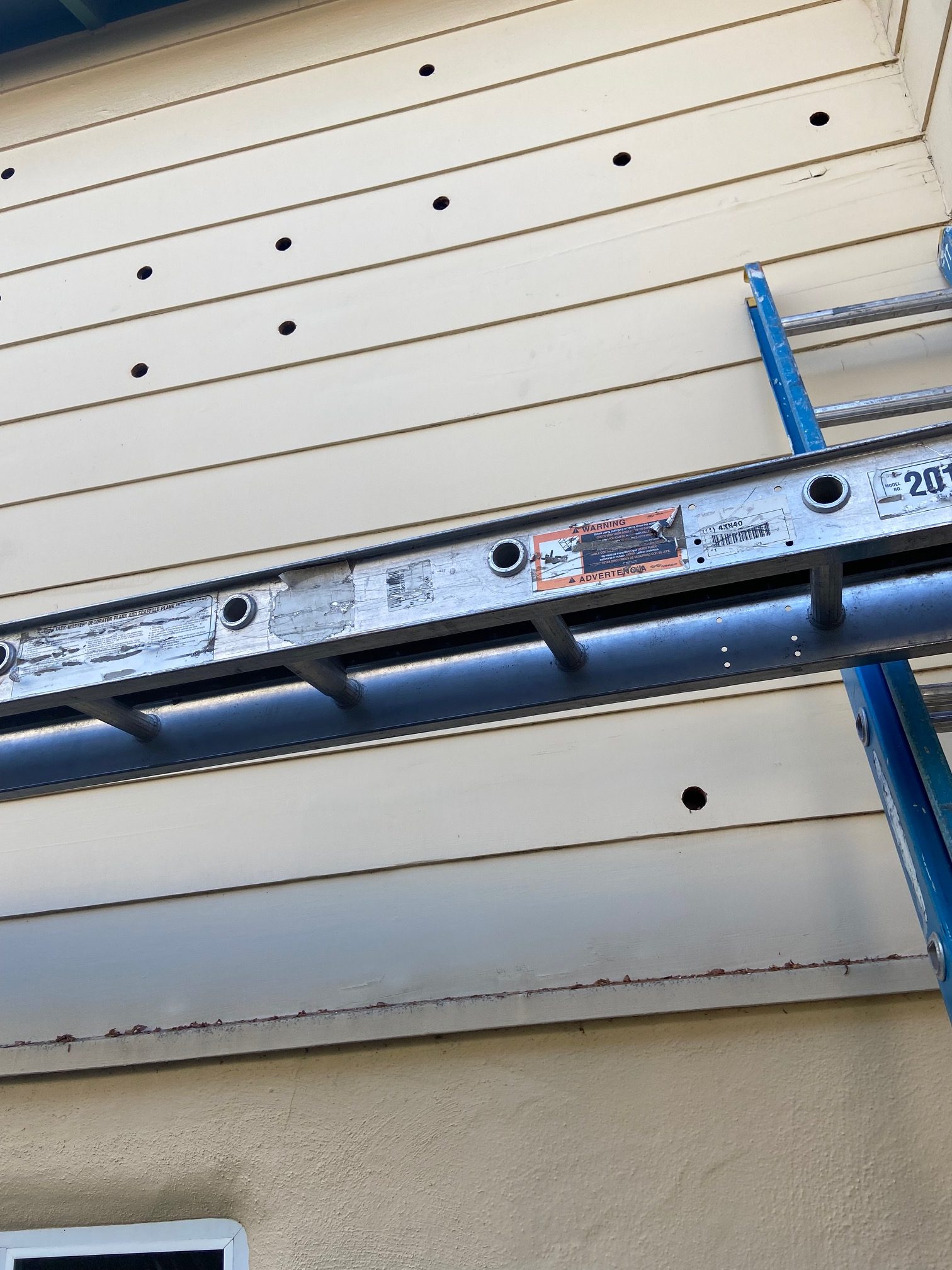
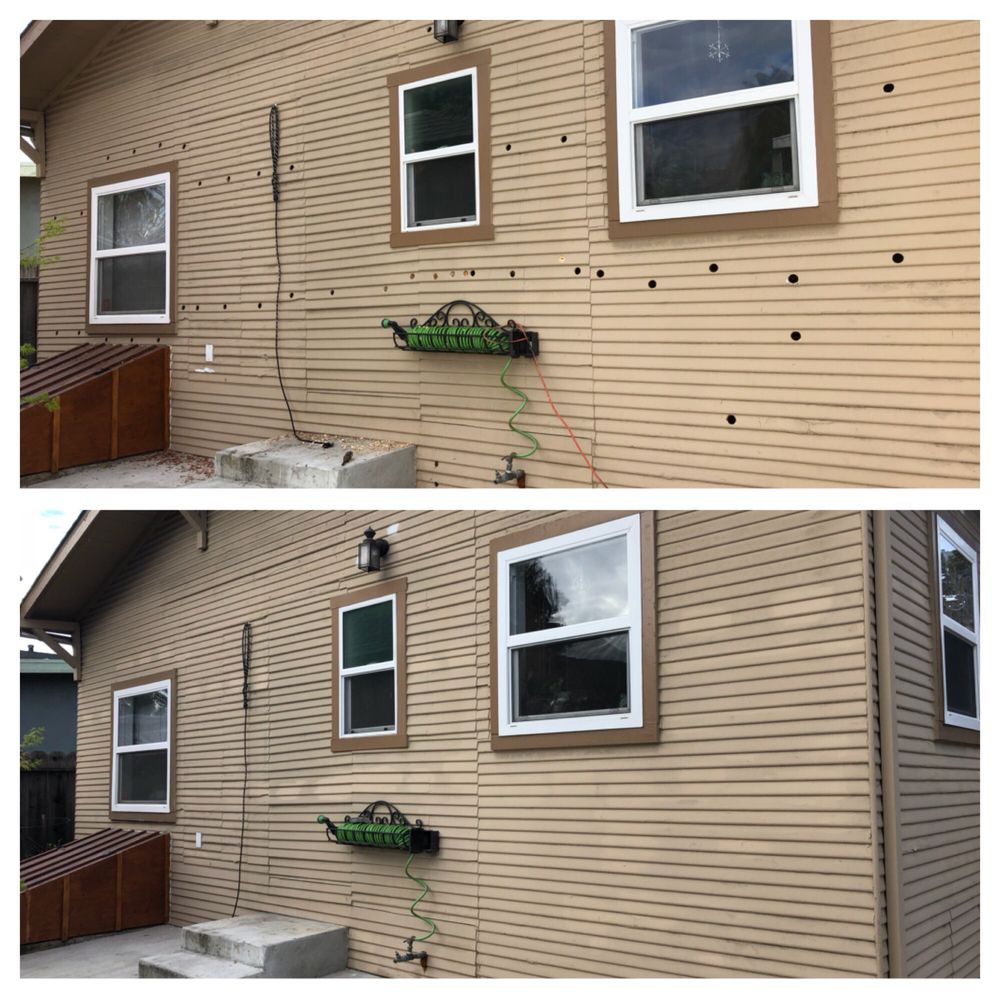
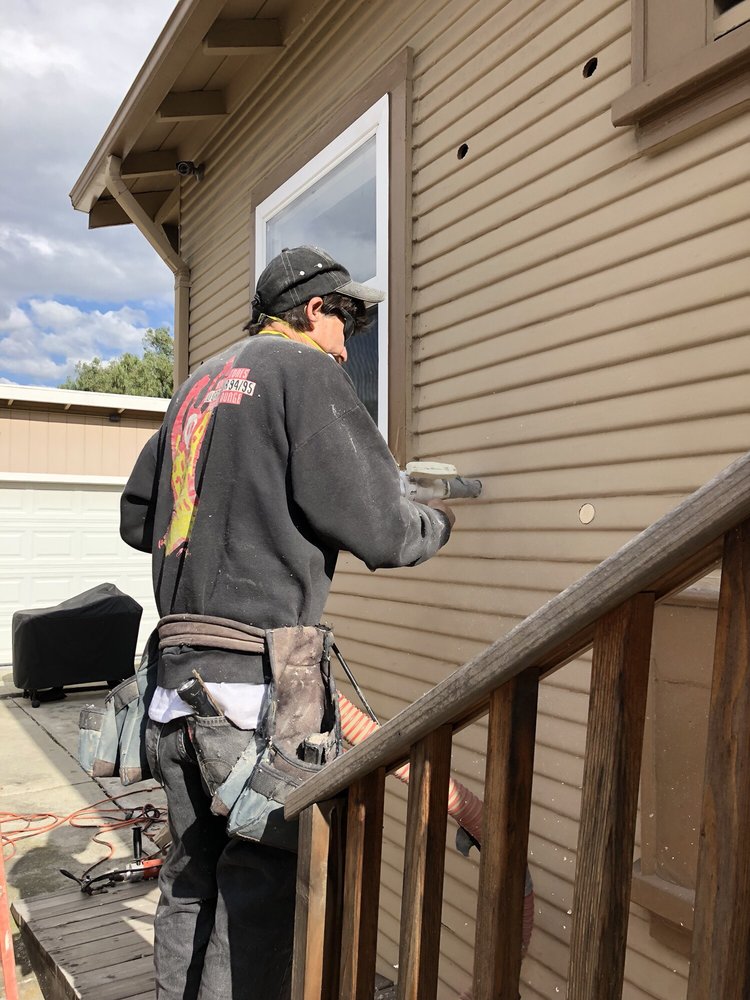
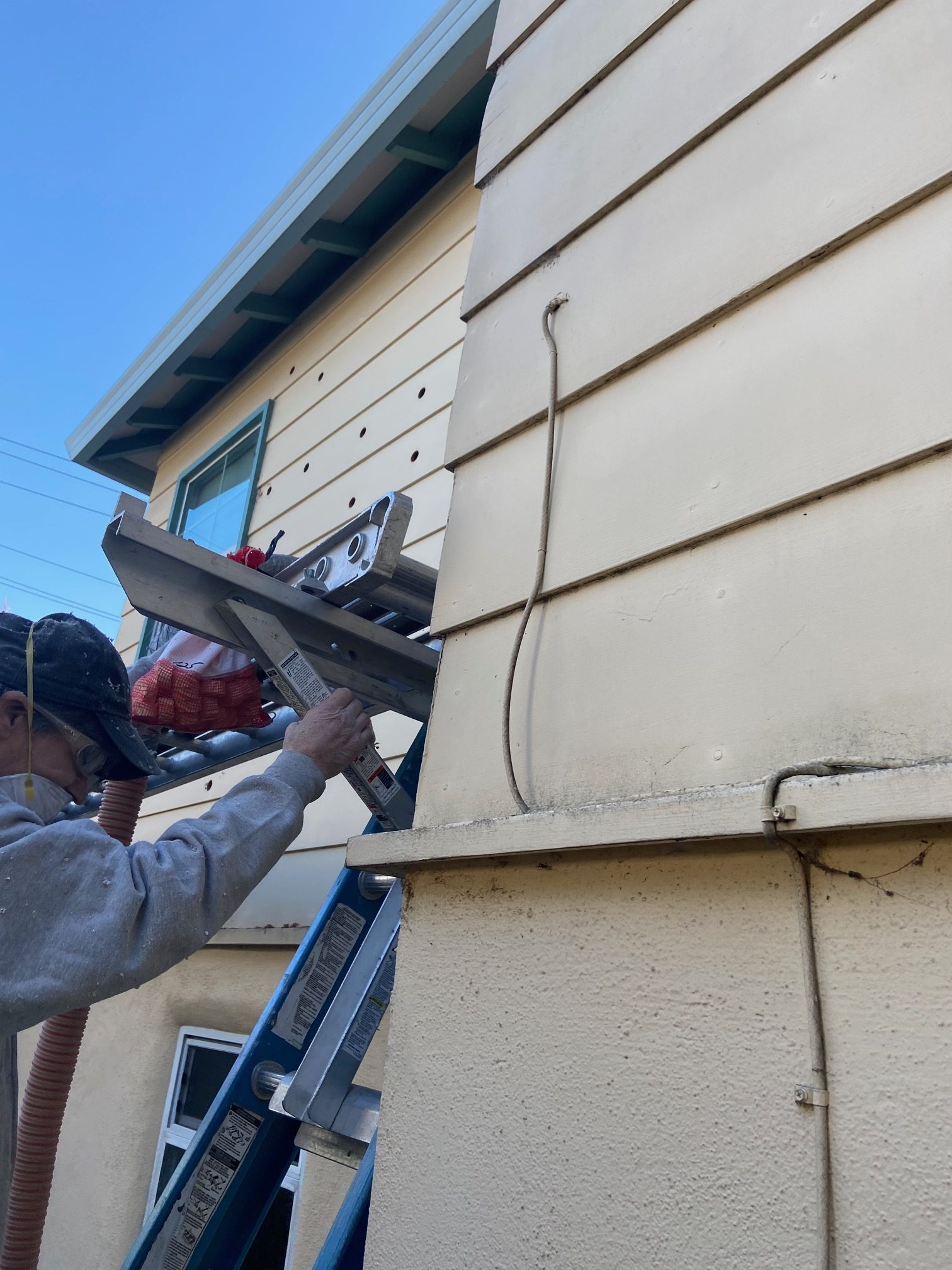
Cellulose is also better suited for walls because of that dusty, powdery quality. As it is installed in walls, through 1.5″ diameter holes drilled through the wood siding or stucco, it gets around the pipes and wires and fills the wall cavity completely, while fiberglass is mostly a chunkier material that sometimes will leave voids on the other side of the pipes and wires. Certainteed’s Optima is a fiberglass insulation that actually overcomes this problem, with smaller glass fibers, and so, if installed properly, is on par with cellulose. But the material costs about twice as much as cellulose, takes twice as long at least, to train a worker to install the Optima in walls, and clearing out a hose clog is a much longer task than with cellulose. So Optima just is not used nearly as much as the cellulose because it simply costs more for the same basic insulation.
And cellulose prevails in other important ways. It is a closed cell material and therefore can seal from air leakage better than fiberglass, which is open cell. It is very good at reducing or eliminating mold and mildew. It is made from recycled paper, so a “green” product. And the cost of cellulose is slightly less. These properties make cellulose the best insulation material available for your home, and the most widely used insulating material in the US for existing homes.
To be fair to fiberglass, it is partially made from recycled glass bottles so it is also a “green” product; it can be used to deaden noise but not quite as effectively; and, again, it’s R-value approaches cellulose, so comparable thermal performance.
Both fiberglass and cellulose manufacturers guarantee their products for the life of the home, but an attic insulated with fiberglass will often not last that long because 25% -50% of the attics insulated with fiberglass become infested with rodents, which compress the insulation and do other things that make it less effective over time, and invalidate the warranty. So for attics, fiberglass insulation should not even be permitted, because of the rodents.
Yet it is. Despite this, fiberglass is still the most common material used for insulating attics of newly constructed homes in the USA, (though given it’s history with rodents, this is difficult to understand.). Today, removing the insulation from attics, due to rodents 95+% of the time, has become an industry, and every large city has companies specializing in this work, vacuuming out attics of their fiberglass insulation, using large gas powered vacuums and specially made fiberglass bags to collect the material and dispose at a dump. This is a sad thing, and add to this, these companies almost always re-insulate the attics with … fiberglass batts, since the rodent removal workers are not trained to use a blowing machine on a blow truck like professional insulation installers. If they could, they would quit their jobs as removal laborers and work as insulation installers. They can only put in the batts, just like a handy homeowner can do. Some rodent prevention work is also provided and warranted for a few years, but roofs are replaced, and warranties expire, and poorer one overpriced job, you may be in the same place at a later date to pay again.
It may seem only common sense to insulate your home using an insulation company with trained insulation installers using insulation machinery and equipment, and installing the best insulation, but there actually are companies such as the rodent abatement companies, who advertise insulation as part of their services, but don’t provide these basic things an insulation company has. Their salespeople will talk to the skies about why their service is “so much better”, and many people hire them, and pay much higher prices for an inferior job that will likely have to be done again. And these companies survive and make money doing this because much of the public just doesn’t know and the various costs of doing their work a winner, so to speak, for them but not for their customers.
Other types of companies specializing in “radiant barrier” technology is an even greater scam, although mostly these have faded out in popularity in recent years, one should still be on the lookout for them. They advertise a thick form of perforated aluminum foil as being superior to traditional insulation and this stuff is actually useless during the cold weather, not as beneficial as traditional insulation during the hot weather. It sells for 1.5 to 2 times the amount of regular attic insulation, but costs a fraction of what insulation costs. So, rather like the removal and re-insulation companies, they charge more than attic insulation costs but their products do not deliver, which is how they exist. Radiant barrier in this application is along the lines of “something for nothing”, though not quite.
And, lastly, some real insulation companies do not use cellulose but rather fiberglass blown-in insulation because they want to keep their fiberglass suppliers happy and do not know enough in this area to make an informed decision themselves, Fiberglass suppliers and manufactures will have songs and dances to go along with the show that includes a list of actual (false) written and unwritten reasons why fiberglass is better, and, most importantly, control of insulation prices, which is very important for any insulation company.
These days, there are fewer hard words thrown by the fiberglass and cellulose industries at each other in public because in the past both realized they were hurting themselves as much as the other, but, it is still important to recognize facts where they make a difference, and this doesn’t have to be an unbearably negative process. There are plenty of cost effective applications for both products to keep everyone busy.
And the cons of cellulose? Sometimes a customer may object to cellulose because of it’s drab light gray color and it’s obvious dustiness, when compared to fiberglass, which is pure white in color, or pure pink, or pure yellow, depending on the manufacturer, and also dust, which is much less visible but much more irritating to the skin and sinuses compared to cellulose dust. However, the serious customer will look at all the other properties and choose cellulose for attics and walls, despite its drab color and harmless dust, in comparison to fiberglass.
Floor insulation requires the fiberglass batts or blankets, but generally makes a noticeable difference in the cold weather only. If your home was built before 1981, the floors are non-insulated. There is a difference in the framing of subfloors that does affect the cost. Houses built before 1950 and after about 1970 are framed usually 16″ or occasionally 24″ on-center joists, and are more affordable to insulate, but houses built between 1950 and 1970 are framed mostly 4′ on-center, and those involve more labor, and possibly should be considered as a candidate for spray foam insulation. But subfloors generally make a smaller difference than the walls or attic during the cold weather, and no difference at all during the hot weather.
So, generally with 4′ on-center framed subfloors, we recommend focusing on the attic and walls first, and if you still feel afterwards that the floors let in too much cold, (they probably are hardwood floors) then they can be also be done any time. Fiberglass batts are used for floors, as cellulose is not yet available in a solid form as the fiberglass is, but rodents generally leave subfloor insulation alone because of gravity. Racoon and opossums can pull some down but they rarely come under homes.
———————————————————————
Air Sealing
Air sealing is reducing air movement cycling through the house, entering in the lower half of the house, and leaving though the upper half where it rises and escapes through natural convection (warmer air rises). First sealing any openings on the attic floor (the ceiling) where it is most important, this makes the house more air tight and more energy efficient. Sealing of lower points in the house is less important, but also can be done. An air sealed home uses less energy to stay warm/cool, and utility costs are lower.
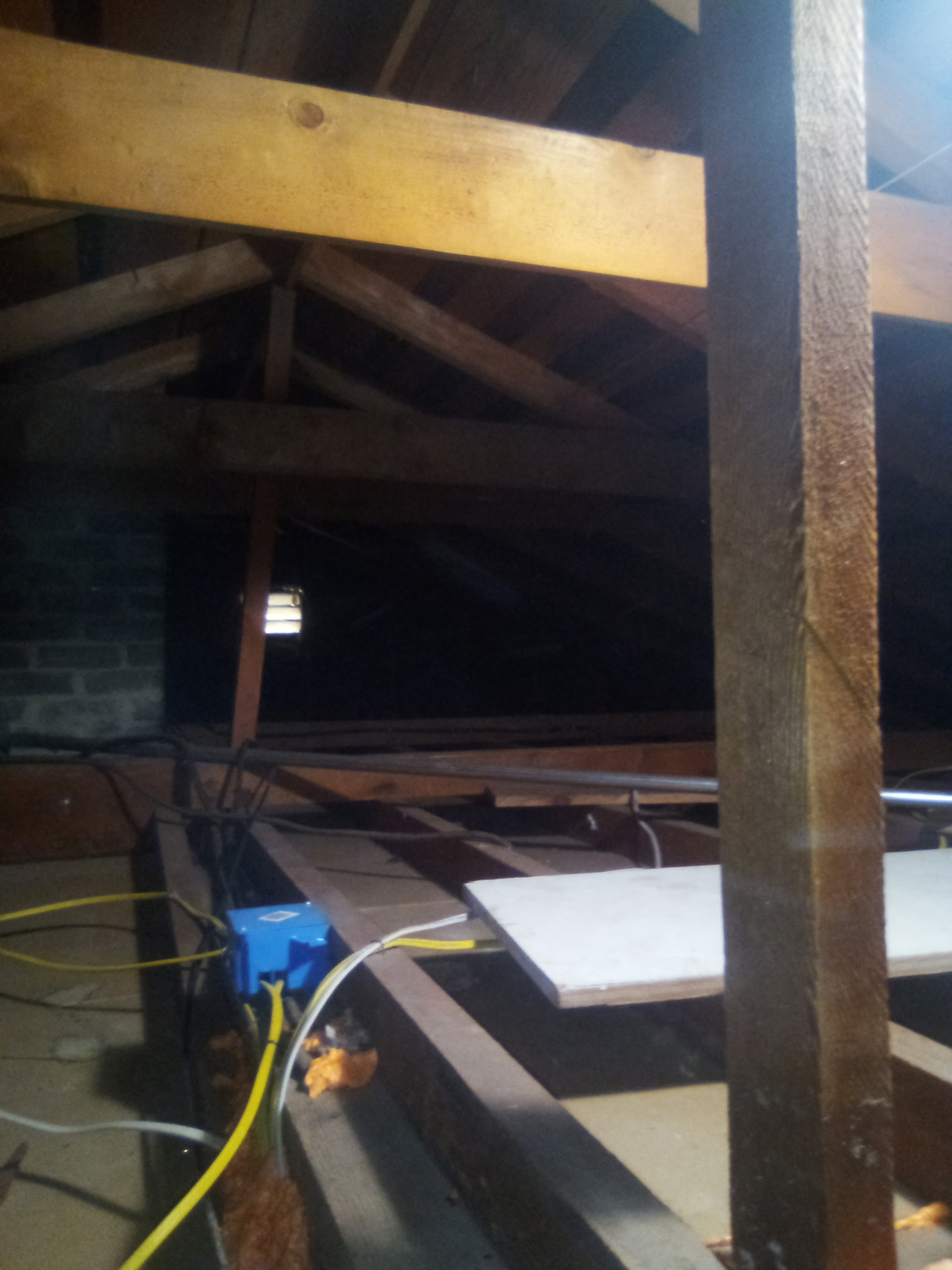
Attics typically have many openings in their floor to the house below, and driven by convection, warm air leaks into the attic. The builders had to make these openings to fit through wires, pipes, recessed lights, recessed fans, chimneys, knee walls, etc., but left them open rather than caulking in the gaps around these fixtures. (Energy was cheaper then). So, now, these openings can still be at least partially blocked by adding cellulose insulation, or, more thoroughly sealed with foam caulking, and occasional rigid foam insulation, plywood, and other materials as needed, followed with the cellulose.
The more complicated the house, the more air sealing work it will likely need, and the more savings it will have. For example, a 3-story split level home with dormer windows built in the 1930s will take more time to air seal and save more energy and cost more than doing air sealing work at a 1-one story ranch style home built in the 1960s . Some houses will cost more than other houses to airseal, but the savings will be greater as well.
It often can be a good idea to use a blower door and a duct blaster to make sure there aren’t any hidden openings in your home where air can leak, and also to make sure your home is not overly airtight upon completion, and we offer these services as well.
Fire Resistance
The different materials handle fires in different ways, and some would promote cellulose as the best material, for example it’s ability to stand up against hotter flames, while others would promote fiberglass material for being made of non-combustible material that just melts after a few hundred degrees. Both have strong advocates, and though much has been said in the past, neither nowadays has much negative to say about the other product’s fire safety record. Both are considered safe against fires as long as they are installed per the manufacturers guidelines printed on each bag of material.
In closing, if you are a homeowner, always use cellulose to insulate your attic. And generally, use cellulose for your walls and fiberglass batts for your floors.
Call us for a free estimate. (800) 281-1898 g.roth@bayvalleyinsulation.com
FAQs
How does insulation work?
You can actually feel how insulation works, conducting heat through the material, by reaching into an 8″ deep layer of attic insulation on a hot day, and feel the temperature drop from the top of the insulation, where it is as hot as the attic, to the bottom of the insulation, along the way gradually getting cooler and cooler, till you reach the bottom, where it is the same temperature as the ceiling. This slow, conductive way of transferring heat illustrates how most insulation materials work. In the same way a potholder works for a pan, or a sweater works for a person, the insulation for the attic of a home, thicker and with a higher R-value, works in a way you can actually feel.
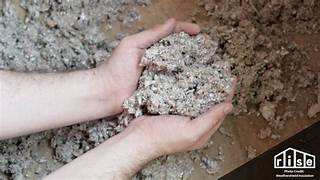
What is insulation made of? Fiberglass insulation is glass spun into very thin fibers so it is very similar to stringy cotton, and cellulose is paper ground so finely it resembles a sort of gray chuncky dust. Chemicals added to the cellulose to repel fires and bugs and rodents.
Why don’t the fiberglass manufactures add boric acid to their material?
Like anything else in construction, almost anything lacks pest resistant chemicals, and yet last for hundreds of years, and fiberglass insulation fits this category, on paper. I do not think building officials realized that rodents would live in the fiberglass insulation. Fire resistance is another story, and fiberglass is a non-combustible material, so, it is sold as a code compliant material. Cellulose, on the other hand, needed to have the boric acid, because it would otherwise be flammable, but became pest resistant perhaps only by accident, just because boric acid is both a fire retardant as well as a pest repellant.
Why don’t the cellulose manufacturers make their material in a solid form, so it can be installed like fiberglass batts?
I’ve seem some efforts that have been used, but it apparently this process is too costly to make it worthwhile.
What about the gaps in a roof? Won’t they allow rodents to enter despite whatever insulation is on the attic floor?
The answer is only if the floor (sheetrock) and floor joists of the attic are covered with cellulose, will the rodents will move on elsewhere. Rodents need basically flat ground to live on, but can’t stand cellulose. This isn’t to say that a roof with no gaps is not desirable, and may well reduce the chances of rodent infestation as well or even better, I don’t know whether building inspectors will ever cite gaps in roofs as a call back items unless it is related to water leaks. Some may like such openings in their roofs to better cool off in the warmer weather, stay ventilated, or allow for thermal expansion. Keep in mind that the size of a opening to allow a rodent to pass through is quite small, a fraction of an inch. A roof may have many of these fraction of an inch sized openings, but also be completely waterproof.
Could insulation cause my ceiling to cave in from it’s weight?
Fiberglass is actually about half the weight (R-30 is about 8 oz/sq ft) as cellulose (R-30 is about 16 oz/sq ft), but this is a non-factor in construction because insulation of any kind is a lightweight material that doesn’t weigh anything down except itself, No one ever bothers to raise the subject of insulation weight on a construction site or over an architectural set of plans, and can be added to your attic using only a small fraction of your ceiling’s weight capacity.
What if I don’t heat or air condition my home?
Well, mostly just a few renters do this to save on their utility bills, but should still try speaking with their landlords about putting insulation in, because the greater year round comfort still applies. And, landlords like tenants who are happy, and an uninsulated home that is also unheated will be much more prone to mold and mildew formation, as well as be very cold in the winter, and very hot in the summer, and tenants would tend to be less happy and less healthy in such a home.
You’re an insulation company, so what do you know about rodents?
Maybe half of all attics have never had any sign of rodents, and of those that do, the signs, mainly droppings, are usually many years old by the time someone notices them, and the rodents long gone. We have looked at least 15,000 attics, of these at least 4,000 specifically involving rodents, and often discussed them in the course of scheduling a site visit and, if sold, while working on them. Plus, we often get just calls every week or two from customers with rodents in their attics and almost every time with careful questioning, the attic was insulated with fiberglass. But one may typically see this general trend by just looking at a few random attics. It is a fact that very few attics with an R-19 or greater layer of cellulose have been made into a home by rodents. The only two cases of rodents living in an attic insulated with 8″ of cellulose that we have seen was a house where the garage was filled with bird seed and open to the attic, and another similar case where a fiberglass insulated access cover surrounded by cellulose, that the rodents accessed from the framing above. These are just facts stumbled on while working in this industry, by which I have benefitted my customers by steering them away from putting fiberglass in their attics, and instead chose cellulose. That I know.
So, the question comes up with rodent infested attics. “What do I do with this dirty mess in my attic?”
Unfortunately, the most common solutions are to leave it alone and hope it goes away, or to remove the old insulation, “sanitize” the attic, such as spraying in a bottle or two of a 50/50 mixture of ammonia and water, “ratproof the attic,” and then re-insulate the attic with fiberglass batt insulation. This later solution is a very costly, to customer, and yet cheap, to contractor, solution, which is why so many pest companies prefer this option.
First of all, if the presence of rodents is not evident there is obviously no need for removal. For the many attics that have had rodents, but are long gone now, there is no literature I have seen that says the past presence of rodents can affect anyone in the home below, And there are others where there is a definite presence of rodents and you can smell them, whether you should just call an exterminator to get rid of them, followed up by a handyman scooping out the messy areas for a bit, or just spend $10-20 K to remove the insulation and sanitize and rat proof and reinsulate. Some can’t afford this second option and it seems overkill anyhow. Others, the ones we don’t hear from, just say “we have rodents scur ringing up there… don’t worry eventually they will go away, forget them.” and they are right, the rodents pack their bags and eventually go away.
What about the heating ducts? Can they be damaged by rodents? Yes, and more.
Rodents can gnaw through the plastic ducts, reduce their efficiency and introduce germs, viruses, allergens, and unpleasant odors to enter your air space, which could in turn cause, for example, respiratory issues. If you suspect a rodent is in one of your heating ducts, (if you can hear them, for example) call an HVAC contractor immediately to deal with the problem. Interestingly, metal ducts, which are mostly invulnerable to rodents, can still be purchased, but have been replaced by more modern plastic lined fiberglass insulated ducts which are vulnerable to rodents. The Internet only touches upon the subject, being all about rodents every where around a house, not focused in the attic and on ducts. Best bet here for more info is to contact several HVAC contractors about this problem, and get 3 bids, and as usual, choose the best one.
Can utility companies help me?
More often than not, yes. PG&E, Silicon Valley Power, Alameda Electric Company, City of Palo Alto Utilities, usually offer incentive programs to homeowners to insulate attics and walls of older homes. Utility companies, like homeowners, want to save on energy costs, and the greatest saver of energy is insulation. Utility companies do not promote the use of fiberglass for attic insulation when they can help it, but also must avoid any overt costly controversies with the fiberglass industry, like anyone else. They do not promote the use radiant barriers as a substitute for attic insulation, or non-insulation companies to participate in insulation work, but use the contractor for the type of job needed. This way, no scams. Utilities promote cellulose for attic and wall insulation, and professional, licensed insulation companies to put it in. If you do these same things for your home, and fill out the right paperwork if there is an incentive going on, then you’ll have an attic well insulated with cellulose and receive a rebate or voucher from your utility company. Definitely a win-win situation.
How much sound does cellulose stop?
In a typical 2″x4″ framed wall, the manufacturer says it stops 70% to 90% of all the noise, but in the real world, where walls have windows and doors, light switches and electric outlets, it is about 50%.
I insulated my attic and afterwards, at the end of some hot days, it stays a little warmer than comfortable, so this situation is worse now than before the new insulation was installed. What do I do now?
There are several solutions to this situation, though, yes, this is a modest setback compared to the many benefits of insulation. Apart from just turning on the air conditioner, some will open a window to let the cooler air in from the outside, and others will open more windows to allow a cross draft. Some homeowners also put a “whole house fan” in their ceilings, which will more quickly push the warmer air out of the house and into the attic, while pulling in the cooler air through the windows.